Last Updated on April 24, 2026 by Tami
Exploring local cuisine is one of the most memorable parts of travel. Each region offers flavors, ingredients, and cooking methods that reflect its culture and history. For many travelers, food becomes a way to connect with a place on a deeper level. At the same time, unfamiliar menus and customs can create hesitation.

(photo credit: Microsoft Stock Images)
Enjoy this practical guide to exploring local cuisine while traveling…
Start with Familiar Entry Points
Local cuisine can feel unfamiliar at first. Starting with simple or widely known dishes can make the experience easier. Many regions have staple meals that are easy to find and widely enjoyed by visitors and locals alike. For instance, in Southeast Asia, a mild Pad Thai offers a perfect introduction to local spices, while in Latin America, a simple empanada or arroz con pollo provides a familiar base of dough, rice, and protein.”
Ask for recommendations from hotel staff or guides. They often suggest dishes that reflect local flavor without being too unusual for first-time visitors. This helps build confidence before trying more unique options. A local food tour is another great option for exploring local cuisine. You might enjoy reading, “Why I Had to Take a Culinary Tour in Ontario.”
Learn Basic Food Terms
A little preparation goes a long way. Learning a few key food-related words can help you read menus and communicate with staff. Terms for common ingredients, cooking methods, and dietary needs are especially useful.
Many menus may not have full translations. Knowing basic words helps you avoid confusion and make informed choices. It also shows respect for the local culture, which can lead to better service and interactions.
Pro Tip: Look for cognates—words that look or sound similar to English.
For example, in many Romance languages:
-
Menu is often menú or carte.
-
Salad is often ensalada, insalata, or salade.
-
Fruit is often fruta, frutta, or fruit.
Pay Attention to Food Safety
Food safety is important when trying new cuisine. Freshness and cleanliness should always be a priority. Choose places that appear clean and well-maintained, especially in busy areas.
Hot food should be served hot, and cold food should stay chilled. Street food can be safe when prepared in front of you and served immediately. Watching how food is handled gives clues about hygiene practices.
Be knowledgeable about the quality of drinking water where you travel. If there is concern, order bottled drinks and avoid eating fresh vegetables, such as in a salad that might have been washed with local tap water.
Respect Local Dining Customs
Dining customs vary across cultures. Some places expect shared dishes, while others focus on individual portions. Table manners, tipping practices, and meal timing can also differ.

Taking time to observe local behavior helps you adjust. Watching how others eat, order, and interact with staff provides useful guidance. For instance, you might notice that in many European cafes, you must signal the waiter for the bill rather than waiting for them to bring it, or that in parts of Asia, it is customary to use two hands when passing a menu. This makes the experience smoother and more respectful. Trying new customs can also add to the overall travel experience.
Pro Tip: If you are traveling with children, involving them in the “observation” phase (watching how others eat) can turn dining into a fun game of “cultural detective.” It keeps them engaged with the environment while they wait for their food!
Balance Adventure with Comfort
Trying new foods is part of the journey, yet comfort matters as well. It is fine to mix familiar meals with new ones, especially during longer trips. This helps maintain energy and avoids fatigue from constant change.
Pro Tip: Use the “Familiar-ish” Rule. When ordering for younger travelers, look for dishes that share a DNA with their favorites at home. A breaded cutlet, a cheese-filled pastry, or grilled meat on a skewer provides a sense of security while still being an authentic local experience.
For those with dietary restrictions, planning is important. Researching options and carrying simple snacks can prevent stress when choices are limited. This balance allows you to enjoy the experience without unnecessary discomfort.
Practical planning also includes preparing for unexpected situations. Having details such as travel insurance and rental car coverage in place supports a smoother trip overall, even if plans change.
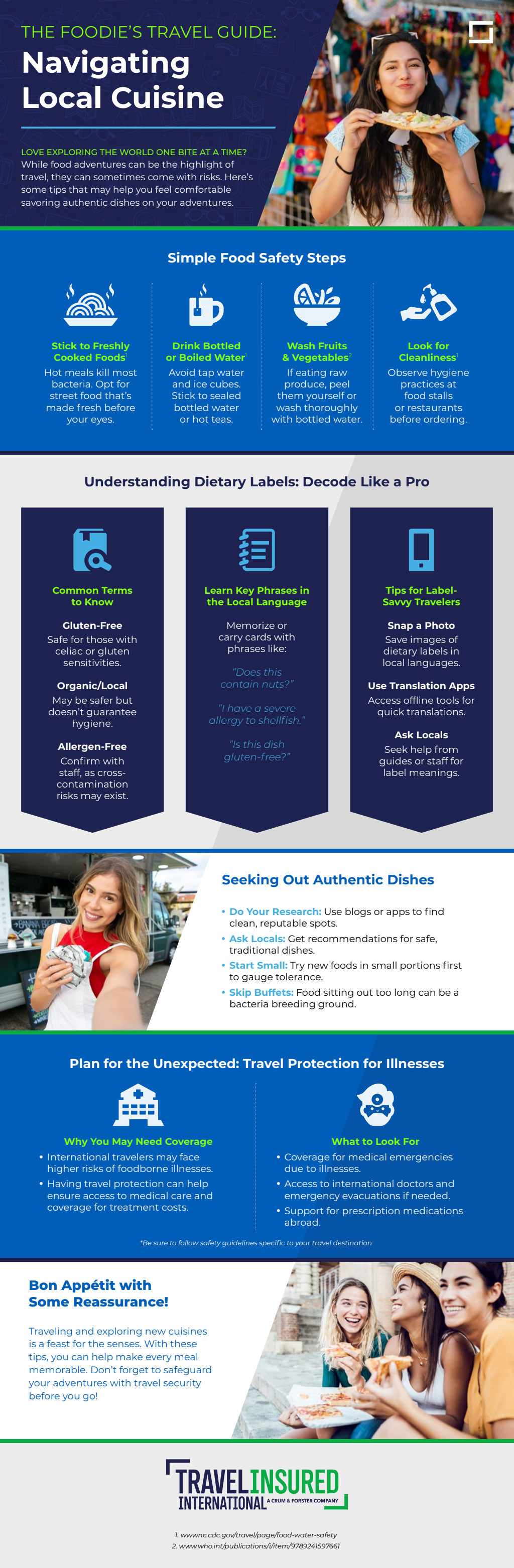
Exploring local cuisine offers more than just meals. It provides insight into culture, tradition, and daily life, revealing the history of a region through its spices and the rhythm of a community through its dining habits. Every shared table is an opportunity to connect with the heart of a destination. With a careful and open approach, travelers can enjoy new flavors while staying confident and prepared throughout their journey. Look over the accompanying infographic below to learn more.